
The Need for Speed
In 2026, users expect interactivity to be instantaneous. Whether it's a financial dashboard, a collaborative document editor, or a multi-player game, real-time communication is no longer an "extra"—it's a requirement.
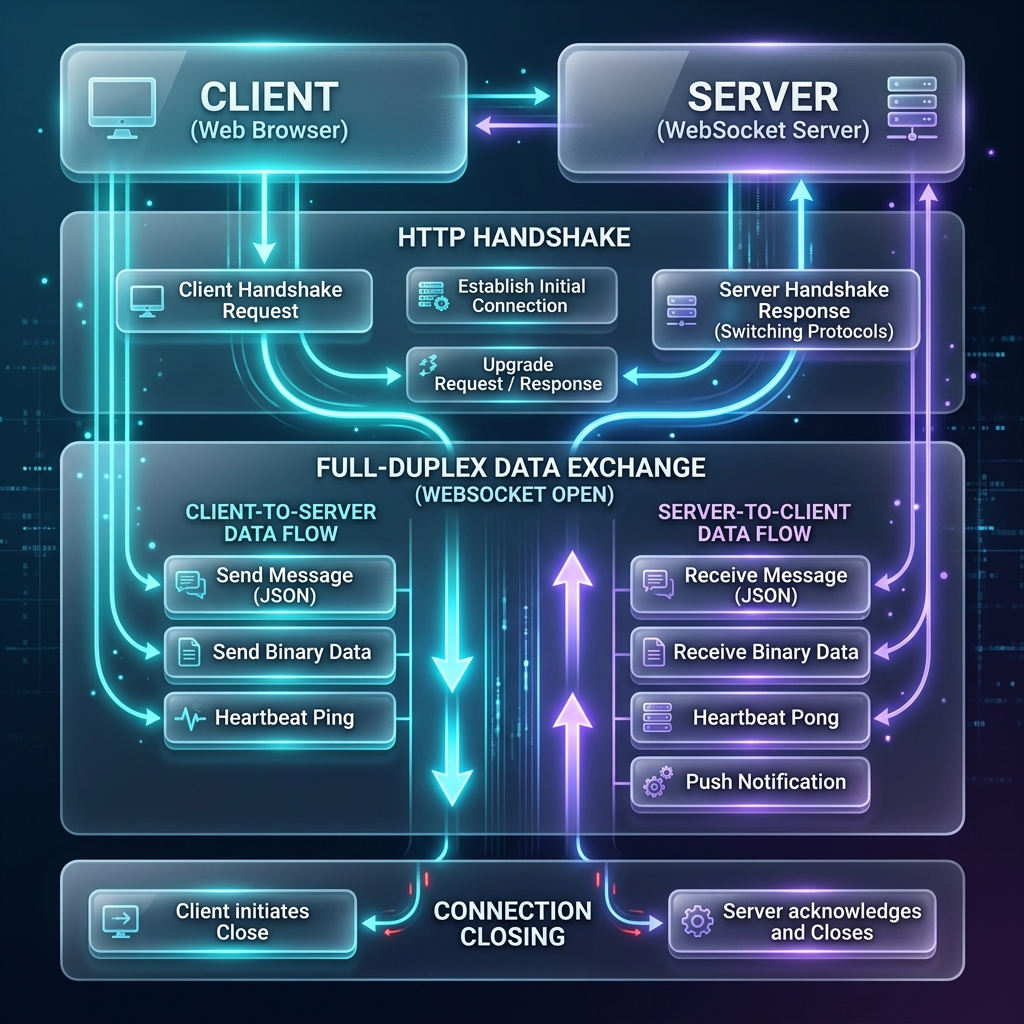
HTTP vs. WebSockets
Traditional HTTP follows a request-response pattern. WebSockets, however, provide a full-duplex communication channel over a single, long-lived connection. This allows the server to push data to the client as soon as it's available, without the overhead of repeated HTTP handshakes.
Mastering Socket.io
Socket.io is the most popular library for WebSockets in the Node.js ecosystem. It provides powerful features like automatic reconnection, rooms, and fallbacks to long-polling if WebSockets are blocked by a proxy.
// Server side (NestJS/Node.js)
@SubscribeMessage('events')
handleEvent(@MessageBody() data: string): string {
  return data;
}

// Client side (React/Next.js)
useEffect(() => {
  const socket = io('http://localhost:3000');
  socket.on('connect', () => console.log('Connected!'));
}, []);
Scaling Real-time Apps
The biggest challenge with WebSockets is scaling. Since each connection is long-lived, you can't just throw more servers at the problem without a way to synchronize data between them. This is where Redis Pub/Sub and the Socket.io Redis Adapter become essential.
Security Best Practices
- Authentication: Always validate tokens (like JWT) during the initial handshake.
- Rate Limiting: Prevent abuse by limiting the number of messages a single client can send.
- Validate Data: Treat every message from a client as untrusted.
Conclusion
Real-time features can significantly enhance your application's user experience. While WebSockets introduce new architectural challenges, tools like Socket.io and Redis make it easier than ever to build scalable, high-performance real-time applications.