
What is the "Edge"?
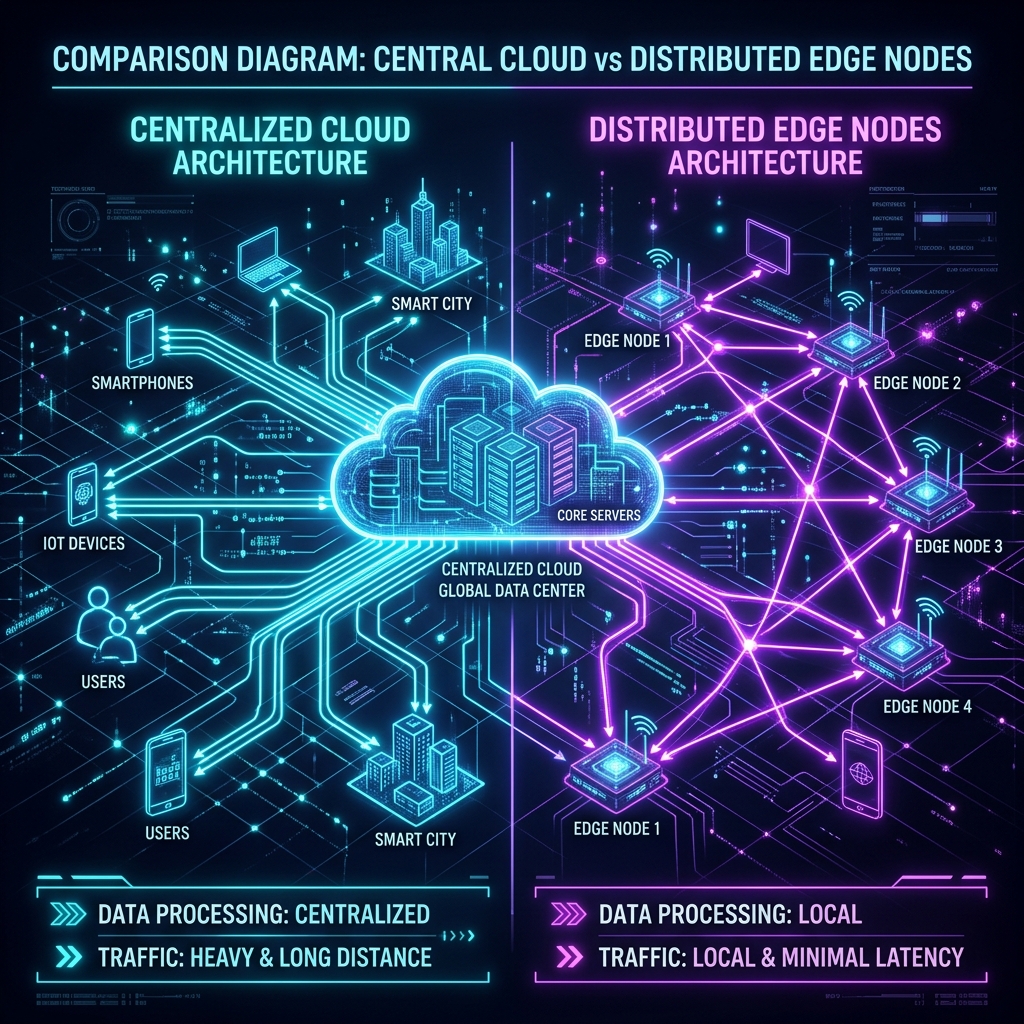
For years, we've deployed our applications to a few centralized data centers (like us-east-1). But in 2026, the "Edge" has become the new standard. Edge computing means running your code on servers that are physically closer to your users, reducing the time data takes to travel back and forth.
The Benefits of Edge Functions
- Lower Latency: Responses are sent from the nearest data center, often reducing Time to First Byte (TTFB) by 100ms or more.
- Scalability: Edge functions scale automatically to handle any amount of traffic without manual intervention.
- Cost-Effective: You only pay for the execution time, often at a lower cost than traditional serverless functions.
Edge Middleware in Next.js
Next.js Middleware runs in the Edge Runtime, allowing you to intercept requests and responses before they reach the cache or the server. This is perfect for:
- Authentication: Checking if a user is logged in.
- Geolocation: Serving different content based on the user's country.
- A/B Testing: Randomly assigning users to different versions of a page.
// middleware.ts
import { NextResponse } from 'next/server';
import type { NextRequest } from 'next/server';

export function middleware(request: NextRequest) {
  const country = request.geo?.country || 'US';
  return NextResponse.rewrite(new URL(`/${country}`, request.url));
}
Limitations of the Edge Runtime
The Edge Runtime is a lightweight version of Node.js. This means you don't have access to all Node.js APIs (like fs or net). You need to be mindful of bundle size and execution limits.
Conclusion
The Edge is not just a trend—it's a fundamental shift in how we build and deploy web applications. By moving your logic closer to your users, you can deliver experiences that are faster, more reliable, and more personalized than ever before.